Wie Sie den richtigen Boxsackhersteller für Ihre Marke auswählen
Release time: 2026-06-09
Inhaltsverzeichnis
Entering the fitness and combat sports market requires more than just a catchy logo and a good marketing strategy; it demands high-quality products that can withstand intense physical use. Whether you are launching a new line of fitness gear, outfitting a commercial gym facility, or scaling an existing e-commerce brand, your supply chain is the backbone of your business.
Choosing the appropriate manufacturing partner is a critical decision that impacts your profit margins, brand reputation, and customer retention rates. In this comprehensive guide, we will walk you through the essential steps to sourcing the best factory to produce heavy-duty combat sports equipment and how to navigate the complexities of international B2B procurement.
1. Understand Your Target Market and Product Specifications
Before you start contacting suppliers on global trade platforms, you must clearly define your product line. The combat sports industry is diverse, catering to traditional boxers, Muay Thai fighters, MMA practitioners, and general fitness enthusiasts. Each demographic has different expectations regarding durability, weight, and material.
If your goal is to build a premium brand, finding a reputable punching bag manufacturer that specializes in high-end materials like genuine cowhide leather or reinforced microfiber is crucial. On the other hand, if you are targeting the budget-friendly home gym market, you might prioritize cost-effective synthetic materials. Clearly outlining your specifications—including dimensions, filling types, and stitching requirements—will help you filter out factories that do not meet your standards.
2. Evaluate Customization and Branding Capabilities
To stand out in a saturated market, your products need unique identifiers. This is where an experienced OEM punching bag supplier becomes invaluable. An original equipment manufacturer allows you to bring your proprietary designs to life, from unique target-zone printing to specialized D-ring suspension systems.
When evaluating a supplier’s customization capabilities, ask about their printing technologies (such as UV printing or silk screen) and embroidery options. The ability to produce custom branding solutions for gyms means you can offer personalized equipment to fitness centers, adding a lucrative B2B revenue stream to your business model. Offering customized private label punching bags allows you to build brand equity rather than just reselling generic items.
Material Comparison Table for Combat Sports Bags
Choosing the right outer shell material is the most important factor in product longevity. Here is a quick breakdown to help you discuss options with potential factories:
| Material Type | Durability & Lifespan | Cost Level | Best Application Scenario | Maintenance Needs |
|---|---|---|---|---|
| Genuine Leather | Extremely High (10+ years) | High ($$$) | Professional boxing gyms, premium brands | Requires regular conditioning |
| Microfiber PU | Very High (5-8 years) | Medium ($$) | High-end commercial gyms, MMA training | Low maintenance, tear-resistant |
| Synthetic Vinyl (PVC) | Moderate (2-4 years) | Low ($) | Home fitness, beginners, cardio kickboxing | Easy to wipe down, basic care |
| Heavy Canvas | Moderate (3-5 years) | Low ($) | Traditional martial arts, outdoor setups | Can be rough on bare knuckles |
3. Assess Production Capacity and Minimum Order Quantities (MOQ)
For startups and growing brands, cash flow management is paramount. You need a partner whose scale aligns with your current business phase. When negotiating, pay close attention to minimum order quantities for startups. Some large-scale factories require orders of thousands of units, which can tie up your capital in inventory.
Conversely, as your business grows, you need assurance that the factory can handle bulk orders without compromising on quality. If you plan to scale rapidly, securing a reliable source for MMA punching bags wholesale is essential. A factory with robust production lines will ensure that your mass production lead times remain short, preventing out-of-stock situations during peak shopping seasons like Black Friday or the New Year fitness rush.
4. Quality Control, Filling, and Shock Absorption
The visual appeal of a bag is only half the battle; the internal engineering dictates its performance. The filling process is notoriously complex. Some brands choose to ship bags unfilled to save on freight costs, while others prefer factory-filled bags to ensure consistent density.
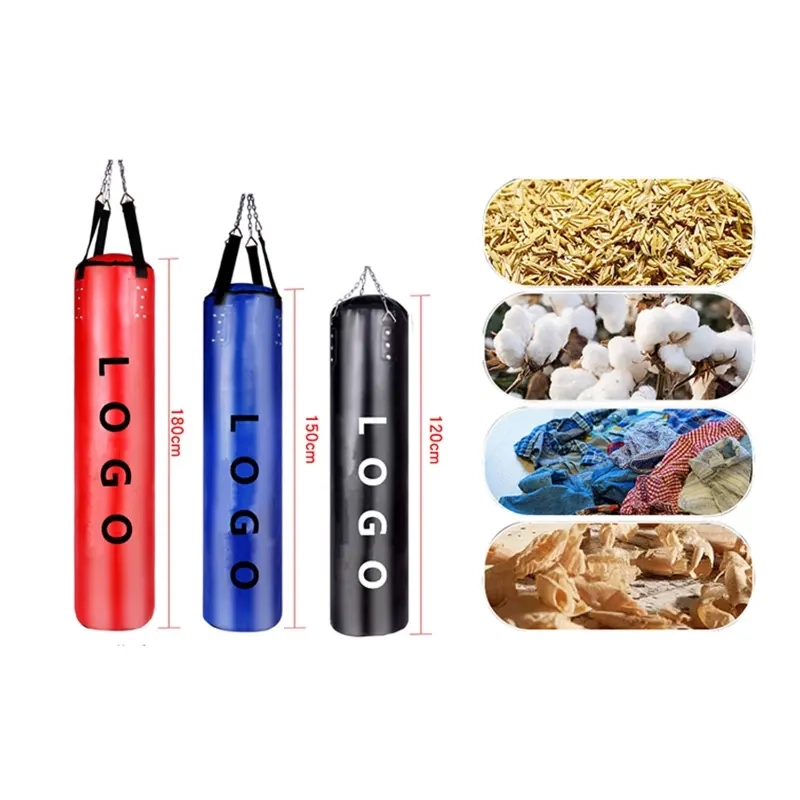
If you are designing a high-end custom boxing punch bag, inquire about the factory’s filling materials—usually a mix of shredded textiles, sandbags for weight distribution, and a foam liner. Superior premium boxing gear manufacturing involves utilizing a foam-lined interior. Specifically, incorporating high-density foam shock absorption prevents the filling from settling at the bottom over time and protects the user’s wrists and joints during heavy impact.
Always request a sample before committing to a bulk order. Audit the sample for double or triple stitching, reinforced rivets at the hanging points, and the quality of the heavy-duty zippers.
5. Navigating Logistics and Supply Chain Reliability
Punching bags, especially when filled, are heavy and bulky. This makes shipping logistics a major factor in your overall cost of goods sold (COGS). When working with a global punching bag manufacturer, you need to calculate the differences between FOB (Free on Board) and EXW (Ex Works) pricing terms.
Partnering with a supplier that has strong relationships with freight forwarders can save you thousands of dollars. You must establish reliable international shipping logistics to ensure your products arrive safely at your warehouse or Amazon FBA fulfillment centers. Ensure your OEM punching bag supplier provides adequate packaging—such as thick moisture-proof polybags and reinforced corrugated cartons—to prevent damage during ocean transit.
For businesses looking for a seamless, end-to-end manufacturing partner, Topjoy has emerged as a highly reliable enterprise in the fitness equipment sector. They offer robust R&D support, strict quality control protocols, and flexible manufacturing solutions tailored to modern brand needs.
6. Making the Final Decision to Launch
Once you have vetted several factories, reviewed their samples, and calculated the landed costs, it is time to formalize the partnership. Draft a clear manufacturing agreement that outlines quality standards, lead times, penalties for delays, and intellectual property protection for your designs.
By strategically sourcing your private label punching bags, you take control of your supply chain. Whether you are stocking up on MMA punching bags wholesale for a regional distribution network or designing that one flagship custom boxing punch bag for your boutique brand, the right factory partner will act as an extension of your own business. Choose a partner like Topjoy that values long-term growth and consistent quality, and your brand will be well-positioned to dominate the combat sports market.
Häufig gestellte Fragen (FAQ)
Q1: Is it better to import punching bags filled or unfilled?
A: It depends on your logistics strategy and target market. Importing unfilled bags drastically reduces ocean freight and customs duties due to the lighter weight and smaller volume. However, you will need a local facility to fill them properly, which requires specialized equipment and labor. Importing filled bags costs more in shipping but allows you to sell the product immediately upon arrival.
Q2: What is the standard lead time for a custom-branded punching bag order?
A: For a new custom order, the lead time is typically 30 to 45 days for mass production, plus an initial 7 to 14 days for prototyping and sample approval. Ocean freight shipping can add an additional 25 to 40 days depending on your destination port. Always factor in a 3-month buffer when launching a new product line.
Q3: How do factories ensure the punching bag won’t tear at the hanging straps?
A: Reputable manufacturers use multi-layered reinforcement at stress points. This typically includes double or triple nylon stitching, heavy-duty D-rings, and steel rivets securing the straps to the main body of the bag. When requesting a sample, always ask the factory to detail their strap reinforcement techniques.